Europe & North America: The Legacy of Industrialization and the Road Ahead


Europe and North America industrialized first, and they have been living with the ecological consequences longest. The transformation of natural landscapes into cities, farms, and industrial zones began in earnest in the eighteenth century and accelerated through the nineteenth and twentieth, leaving behind a legacy of habitat loss, pollution, and biodiversity collapse that continues to unfold today. Yet these are also regions where environmental awareness runs deepest, where conservation movements were born, and where the most ambitious policy experiments in ecological restoration are underway. The story of Europe and North America is one of damage, partial reckoning, and the difficult work of repair.
Urban sprawl remains one of the most persistent drivers of ecological loss in both regions. The North American model of low-density suburban development — built around the private automobile and dependent on vast road networks — has consumed enormous areas of farmland, wetland, and forest at the urban fringe. Impervious surfaces prevent rainfall from infiltrating the soil, overwhelming stormwater systems, degrading waterways with runoff laden with oil, fertilizers, and road salts. Light pollution from sprawling urban areas disrupts the behavior of nocturnal animals, affects plant flowering cycles, and disorients migratory birds. The ecological footprint of a suburban household extends far beyond the property line.
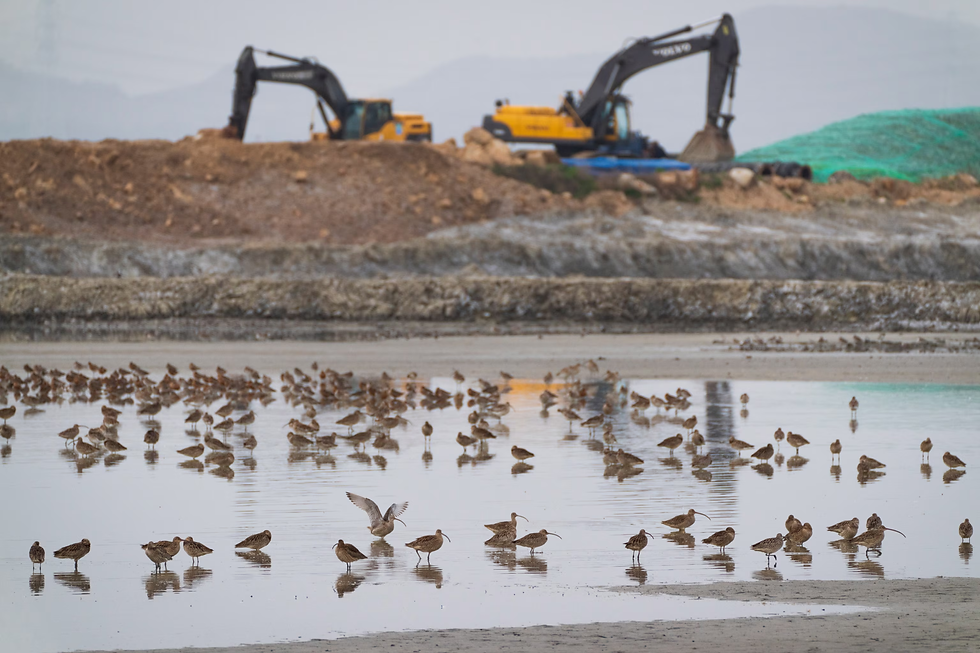
The construction industry, including the building of sports stadiums and large infrastructure projects, offers a sharp illustration of how human development imposes ecological costs that rarely make headlines. Stadium construction requires enormous quantities of steel and concrete — materials whose production generates significant greenhouse gas emissions — while site preparation displaces wildlife, alters drainage patterns, and generates construction waste. Once built, these facilities consume energy and water at industrial scales while operating for only a fraction of available hours. Transportation to and from events adds a further layer of carbon emissions. As one EISD analysis notes, the traditional model of massive permanent sporting venues is increasingly difficult to reconcile with urgent environmental imperatives.
Agricultural practices across both continents have transformed landscapes at an enormous scale. Industrial monoculture farming — the cultivation of single crops across vast areas — has replaced the diverse patchworks of fields, hedgerows, woodlands, and wetlands that once supported rich assemblages of wildlife. The dramatic decline of insect populations in Europe, documented in numerous long-term studies, is closely linked to pesticide use, habitat simplification, and the loss of wildflower meadows. In North America, the conversion of the Great Plains to cropland — and the suppression of fire regimes that once maintained prairie ecosystems — has left only scattered remnants of one of the continent's most distinctive biomes.
Water systems on both continents bear the marks of centuries of human modification. European rivers have been dammed, straightened, and channelized to the point where less than a quarter of river length is considered in good ecological condition. In North America, the Colorado River — once a roaring waterway that carved the Grand Canyon — now frequently fails to reach the sea, its flow entirely consumed by agricultural and municipal withdrawals before it crosses the Mexican border. Groundwater aquifers in the American Midwest, recharged over thousands of years during wetter climatic periods, are being drawn down at rates that will exhaust them within decades at current consumption rates.
Europe has made more substantial regulatory progress on environmental protection than most world regions, driven by the European Union's ambitious legislative framework. The EU's Habitats and Birds Directives have created a network of protected areas — Natura 2000 — covering nearly a fifth of European land area. Recent biodiversity and farm-to-fork strategies have set targets for reducing pesticide use, expanding organic agriculture, and restoring degraded ecosystems. These are meaningful commitments, though implementation varies widely between member states and enforcement remains a perennial challenge. North America's environmental regulatory landscape is more fragmented, subject to significant political swings, and lacks the supranational coordination that European policy benefits from.
The path forward in Europe and North America runs through both technological transformation and behavioral change. Transitioning energy systems from fossil fuels to renewables is essential, but so is reducing overall consumption, restoring degraded habitats, and redesigning cities to be less car-dependent and more ecologically integrated. Urban rewilding projects — reintroducing beavers to English rivers, wolves to Yellowstone, pollinators to city rooftops — have demonstrated that ecological recovery is possible when given the chance. These regions carry a particular responsibility: having industrialized first and consumed the most, they bear the greatest obligation to lead the transition to a model of development that does not devour the natural world in the process.


Comments