The Thirst Behind the Prompt: AI's Hidden Environmental Footprint

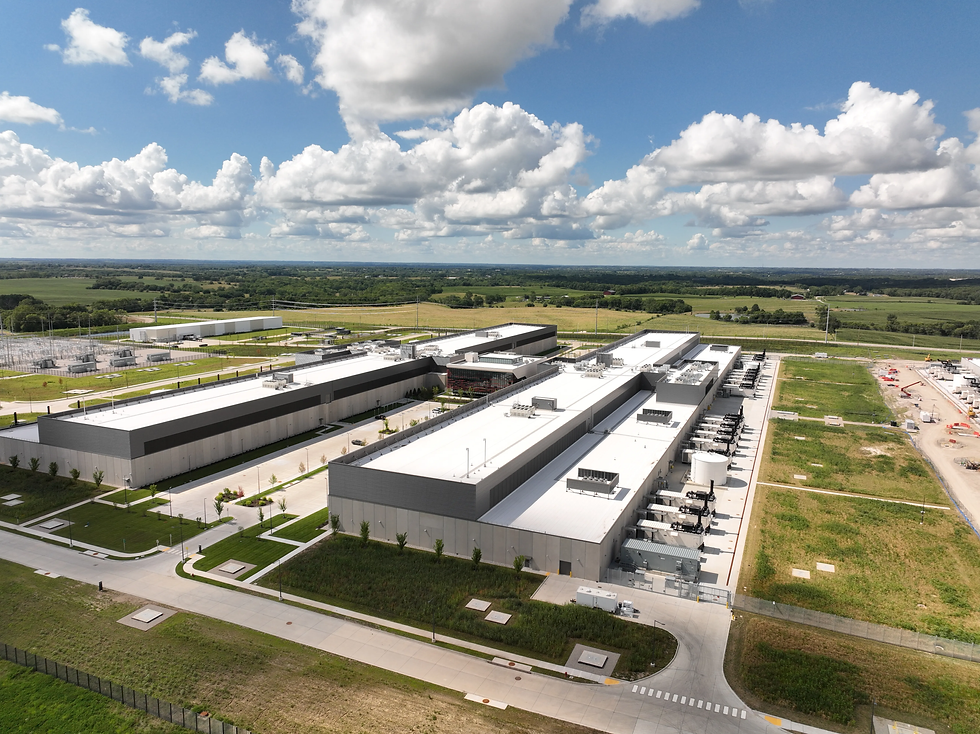
When people picture artificial intelligence, they rarely picture water towers, power plants, or drought-stricken farmland. AI feels weightless: a chat window, an answer, a generated image. But every query runs on physical infrastructure, in buildings full of servers that draw enormous amounts of electricity and generate heat that must be removed. Our earlier series examined the gap between AI marketing and AI reality. This post looks at a different gap: the distance between AI's clean image and its material footprint.
Start with electricity. The International Energy Agency reported that data center electricity demand grew 17 percent in 2025, more than five times faster than global demand overall, as tech companies spent over $400 billion on AI infrastructure. The agency expects data center demand to double by 2030, with AI-specific demand tripling. In its 2025 baseline report, the IEA put the scale in national terms: data centers worldwide would reach roughly 945 terawatt-hours by 2030, slightly more than Japan uses today. In the U.S., the shift is especially sharp. Data centers are on course to account for almost half the country's growth in electricity demand through 2030.
Water is the less visible cost, and in 2026 it has become the more contentious one. Servers are often cooled by evaporation. In data center cooling, 70 to 80 percent of the water withdrawn is lost to evaporation through cooling towers, so it does not return to the local supply. Location makes this worse. An analysis found that 517 of 809 planned U.S. data centers are sited in places that have been in drought throughout the past year. The conflicts are now local and concrete. In early May 2026, developments in Arizona and Georgia were caught taking public water without authorization, in communities already under water stress, and in both cases residents were the ones who discovered it.
Transparency is a large part of the problem. When the Texas Water Development Board asked 341 data centers to report their 2025 water consumption, roughly 80 percent had not responded a week before the deadline. Without disclosure, communities can't weigh what a new facility will cost them. Researchers also point to a hidden layer: the electricity that data centers consume requires water to generate too, and one analysis estimated that data center power demand used 211 billion gallons of water in 2023.
The industry's case deserves a fair hearing. Operators say they are moving from standard evaporative cooling to closed-loop systems that circulate the same coolant continuously, but those systems save water at the cost of using more energy. Some estimates also put the problem in proportion. In Phoenix, even the worst-case Ceres projection would make data center water use roughly 1 percent of the metro area's residential consumption. The IEA itself notes that AI is also driving investment in next-generation nuclear reactors, flexible data centers, and long-duration energy storage. The honest picture is not "AI is draining the planet." It is that the impacts are highly local and poorly reported, and they are growing faster than oversight.
Communities are starting to push back, and they are winning. In Tucson, resident protests led the city council to reject a proposed data center called Project Blue, after which the developer committed to a zero-water cooling system. In Ohio, the state EPA dropped a proposed blanket wastewater permit for data center cooling water in July 2026 after more than 7,000 public comments opposed it. These are not anti-technology victories. They are demands that a new industry play by the same rules of disclosure and resource accountability as everyone else.
The lesson connects back to AI hype. Marketing sells AI as frictionless, but nothing that runs on electricity and water is frictionless. The most useful thing readers can do is ask the questions that hype discourages: Where is this data center being built? Where does its power come from? How much water will it consume, and who gets to know? Sustainable AI is possible, but only if its footprint is visible enough to be measured, debated, and managed.


Comments