From Ocean to Body: The Microplastics Crisis We're Only Beginning to Understand

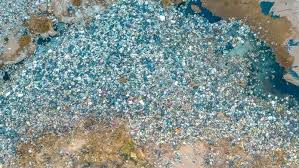
For decades, the story of plastic pollution was told primarily as an ocean story. Images of sea turtles tangled in six-pack rings, albatrosses feeding bottle caps to their chicks, and the swirling mass of the Great Pacific Garbage Patch defined public understanding of the problem. Those images were accurate and important — but they were also incomplete. The plastic crisis was never only about what we were doing to the sea. It was about what the sea, the soil, the air, and our food were doing back to us. Microplastics — particles smaller than five millimeters, and nanoplastics smaller still — have now been found in human blood, lung tissue, placenta, breast milk, and most recently, in the walls of human arteries. The question is no longer whether we are carrying plastic in our bodies. The question is what it's doing there.
Microplastics originate from two main sources. Primary microplastics are manufactured at small sizes — microbeads in cosmetics and personal care products, plastic pellets used as raw material in manufacturing, synthetic fibers shed from clothing during washing. Secondary microplastics form when larger plastic objects fragment under UV radiation, wave action, and physical abrasion. Both types accumulate in the environment at staggering rates. Humans are estimated to ingest between tens of thousands and hundreds of thousands of microplastic particles per year through food, water, and air — with bottled water, seafood, sea salt, beer, and even tap water identified as significant sources. We also inhale them. Microplastic fibers from textiles, road dust, and degrading plastic waste are now a constituent of urban air. There is, at this point, effectively no plastic-free food supply or breathing environment anywhere on Earth.
The health implications are still being mapped, but early findings are concerning. A 2024 study published in the New England Journal of Medicine found that patients with detectable microplastics and nanoplastics in their carotid artery plaques had a significantly higher risk of heart attack, stroke, and death over a subsequent three-year period compared to those with lower or undetectable levels. The mechanism is not yet fully understood, but researchers hypothesize that plastics trigger inflammatory responses and may carry adsorbed chemical pollutants — including pesticides, heavy metals, and endocrine-disrupting additives — directly into tissue. Bisphenol A (BPA) and phthalates, plasticizers commonly found in consumer plastics, are known endocrine disruptors linked to hormonal disruption, reproductive issues, and developmental problems in children, and microplastics may serve as a delivery vehicle for these compounds into organs where they would not otherwise penetrate.
The discovery of microplastics in human placentas and breast milk is particularly significant for thinking about developmental exposure. Fetuses and infants are exposed to these particles at the very earliest and most sensitive stages of biological development, before immune and detoxification systems have matured. Animal studies have shown that microplastic exposure during development can affect organ formation, gut microbiome composition, and neurological development — though whether these effects translate directly to human outcomes at environmental exposure levels remains an active area of research. The precautionary principle would suggest this warrants serious urgency; the research establishment's typical demand for definitive proof before action means the scientific consensus will lag years or decades behind actual exposure levels.
There is also a profound inequality dimension to microplastic exposure. Plastic pollution does not distribute itself evenly. Communities near plastic production facilities, waste processing sites, and agricultural areas where plastic mulch films are heavily used face higher exposures. Populations that rely more heavily on processed foods in plastic packaging, or whose water supplies are less rigorously filtered, carry higher body burdens. Many of the world's fastest-growing plastic waste problems are concentrated in lower-income nations in Southeast Asia and Africa, where waste management infrastructure is insufficient to prevent plastic from entering waterways and soils. The populations producing the least plastic waste and deriving the fewest economic benefits from the plastic economy often face the greatest exposure.
Regulatory responses have been uneven and slow relative to the scale of the problem. The EU has moved most aggressively, banning many single-use plastics and beginning to regulate microplastic intentionally added to products. A global plastics treaty, negotiated under UN auspices, has been under discussion since 2022 but as of mid-2026 has not yet achieved a binding agreement, stalled in part by oil-producing nations whose petrochemical industries are tightly linked to plastics production. Individual country bans on plastic bags, straws, and single-use cutlery have proliferated but address a small fraction of overall plastic production. The production of virgin plastic continues to grow globally, driven by petrochemical expansion and a recycling system that, as EISD has previously covered, handles only a small fraction of plastic waste.
What makes the microplastics crisis uniquely challenging is that, unlike many pollution problems, there is no remediation pathway. You cannot filter microplastics out of human arteries, out of soils where they've accumulated for decades, or out of deep ocean sediment. Prevention is the only meaningful intervention. That means reducing plastic production at the source — not just improving disposal — and rethinking the material economy that made single-use plastic the default packaging medium for virtually everything humans consume. The body burden of plastic we already carry may be with us permanently. What we accumulate from this point forward is still a choice.



Comments