Moving the Town: Managed Retreat and the Politics of Leaving

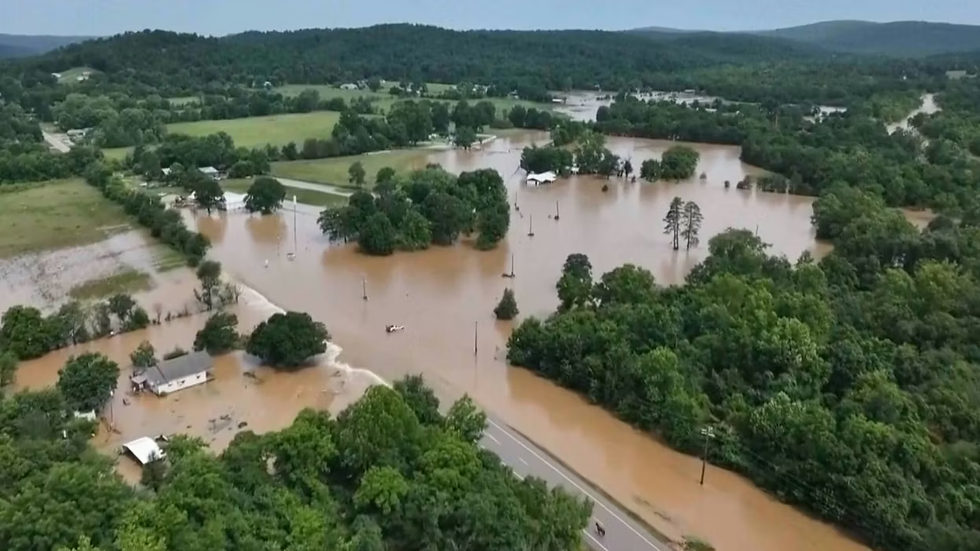
In the summer of 1993, the Mississippi River broke through a levee and swallowed the village of Valmeyer, Illinois. The town sat under 16 feet of water that stayed for months. Most flooded towns did what American towns usually do: they waited for the water to recede, mucked out the basements, and rebuilt in the same spot. Valmeyer did something almost unheard of. On September 8, 1993, more than two-thirds of residents voted to move the whole town to a cornfield and woodland about two miles away and 400 feet higher. Three decades later, it is still the case planners point to when they talk about a policy most politicians would rather not discuss: managed retreat.
The term sounds bureaucratic, but the idea is simple. Managed retreat means deliberately and collectively moving people and buildings out of harm's way. In practice, in the United States it usually happens through voluntary government buyouts, where at-risk properties are purchased and then demolished or relocated. The logic follows from what this blog described in "When the Insurers Leave First." When insurers stop writing policies in a flood or fire zone, the market is saying something that politics hasn't yet admitted: some places can't be defended at a price anyone is willing to pay. Managed retreat is the planned response to that message. The alternative is an unplanned retreat that happens one foreclosure and one disaster at a time.
Valmeyer shows that planned retreat can work. It also shows how hard it is. The town had to work through the often-conflicting rules of 26 different state, federal, and local agencies to get funding and permits. It used FEMA and Illinois money to buy out about 300 homes and 25 businesses on the floodplain. Not everyone came along. Only about 60% of the original residents moved to the new town. Years later, the former mayor said the town was still struggling to get businesses established. A town is more than its houses. It is a web of churches, diners, and neighbors who borrow each other's tools, and that web doesn't automatically survive being moved two miles up a bluff.
The harder cases are coastal, and they are often Indigenous. Isle de Jean Charles in Louisiana has lost 98 percent of its land area since 1955. Its residents became some of the first in the country to be resettled with federal climate adaptation money, but the process has been bitter. The tribe's leaders say they weren't treated as partners, and that they learned the state had bought land for their resettlement by reading a press release. In Alaska, villages such as Newtok and Shishmaref, where thawing permafrost and coastal erosion are eating away the ground under homes, have spent decades trying to secure money to move. The pattern repeats: the communities with the oldest ties to a place are often the first asked to leave it, and the last to be consulted about how.
The scale ahead is very different from one Illinois village. The 2018 National Climate Assessment anticipated the eventual relocation of millions of people, describing retreat from rising seas as an unavoidable option. Yet the US still handles retreat mainly through disaster programs that start after the flood, not before it. Buyouts are slow, often taking years from application to closing. They also tend to favor wealthier areas, because benefit-cost formulas value expensive homes more highly. Meanwhile, federal flood insurance and post-disaster rebuilding aid keep encouraging people to stay and rebuild in the same risky places.
The real question isn't whether Americans will leave dangerous places. Many already are, because rising premiums, unsellable homes, and the third flood in ten years push them out. The question is whether that movement will be planned, fair, and humane, or chaotic and left to the market. Valmeyer's lesson is that a community can choose its own future if it decides early enough and has public money to back the decision. The communities facing that choice now deserve the same chance, before the water makes the decision for them.


Comments