The Mud That Feeds a Flyway: Korea's Tidal Flats and the Birds That Depend on Them

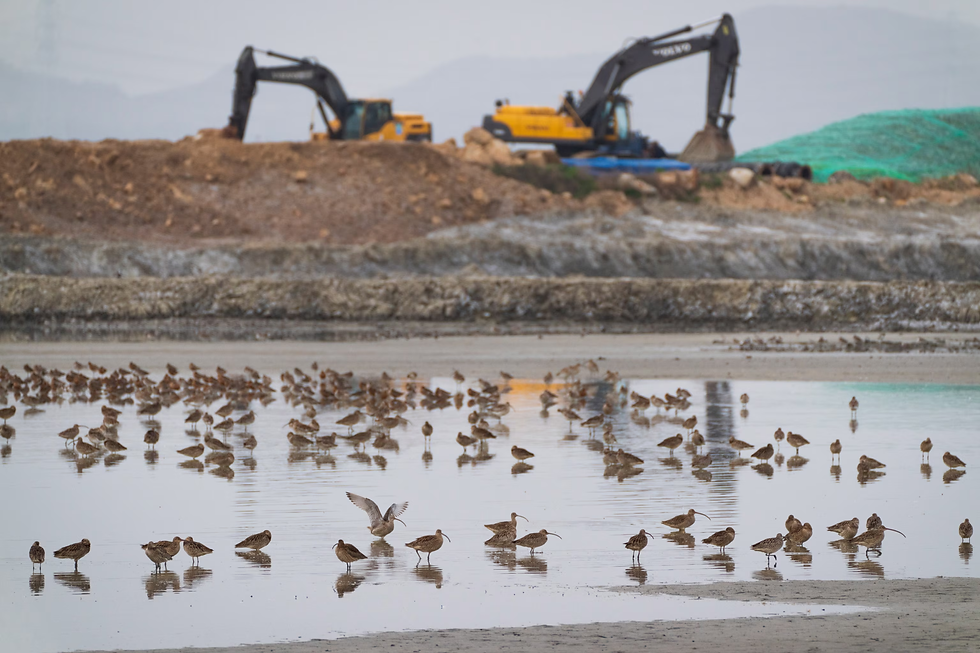
At low tide on Korea's west coast, the sea pulls back so far that it seems to leave entirely. What it leaves behind is mud: gray, shining, and running to the horizon. To most visitors it looks like empty ground. In fact it is one of the most productive ecosystems on Earth, and millions of migrating birds depend on it to survive. Koreans call these flats getbol. The fate of the getbol is one of the most important and least-told stories in global conservation.
The mud matters because of where it sits. Shorebirds such as the great knot, bar-tailed godwit, and far eastern curlew make some of the longest journeys in the animal kingdom, flying between wintering grounds in Australia and New Zealand and breeding grounds in the Russian Arctic and Alaska. This route is called the East Asian–Australasian Flyway, and the Yellow Sea is its fuel stop. Birds arrive exhausted after thousands of kilometers and gorge on worms, clams, and crabs, sometimes nearly doubling their body weight before moving on. If the stopover goes, the birds have nowhere to refuel. There are few alternatives to a tidal flat.
For decades, the region treated this mud as wasted land waiting to be improved. During East Asia's economic boom, seawalls went up along both the Korean and Chinese coasts, turning flats into farmland, industrial parks, and ports. Studies estimate the Yellow Sea's total tidal-flat area fell from roughly 10,500 km² in the 1980s to about 6,700 km² by the 2010s, a loss of around one percent a year. Korea's own coast lost about 65 percent of its tidal-flat area after the 1950s.
The defining case is Saemangeum. That project ran from 1991 to 2010 and reclaimed about 40,900 hectares of tidal flats, roughly two-thirds the size of Seoul, for agriculture and an industrial complex. Before reclamation, the estuary supported at least 330,000 shorebirds a year, including around 30 percent of the world's great knots. After the seawall closed in April 2006, the tidal range inside it collapsed from about six meters to roughly ten centimeters by 2008, and the habitat degraded quickly. Shellfish beds died en masse. The birds did not simply move next door. Shorebird numbers at Saemangeum and two nearby wetlands fell by 130,000 within two years. Researchers later linked declines in great knots wintering in Australia directly to the loss of that one site. A decision made about land in Korea showed up as an emptier beach in Queensland. Years later, the reclaimed land still had not delivered much. In 2023 it hosted the World Scout Jamboree, which became an international embarrassment when heat illness swept through campsites on the shadeless former seabed.
In recent years, however, the story has turned. Korea passed a Tidal Flat Act in 2019 that halts further reclamation of tidal flats and marks a shift in national policy from reclamation toward protection. In July 2021, four Korean sites were inscribed on the UNESCO World Heritage List as "Getbol, Korean Tidal Flats." The protected area has since been expanded, and UNESCO has recorded more than 2,400 plant and animal species across it, including 53 found nowhere outside the Yellow Sea. Restoration projects are now reopening some old seawalls and letting tides return.
The broader lesson is about what we count as valuable. Tidal flats are hard to love on sight. They smell, they are hard to walk on, and they make poor photographs next to rainforests or coral reefs. For half a century that made them easy to sacrifice. Korea's turn from building seawalls to seeking World Heritage status shows that a country can learn to see an ecosystem differently. The birds working their way up the flyway this spring will need the rest of the region to learn the same thing.


Comments