When the Insurers Leave First

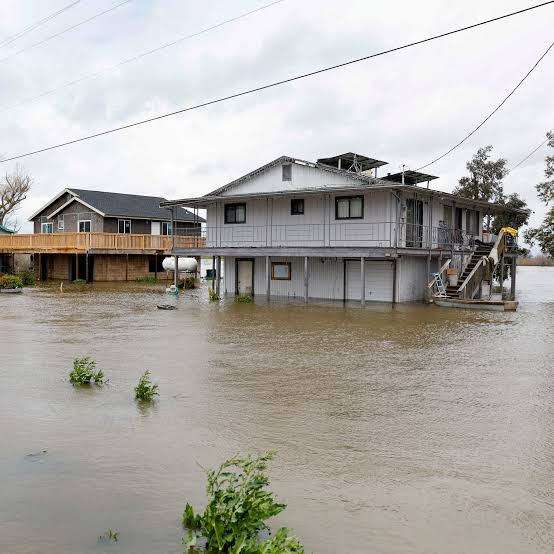
Climate policy is usually imagined as something governments decide and citizens debate. In the United States, the most consequential climate pricing mechanism of the past several years was not legislated at all. It was underwritten. Insurers, recalculating catastrophe exposure faster than any regulator, have been raising premiums, narrowing coverage, and declining to renew policies — and in doing so they have imposed a cost of climate risk on households more directly than any carbon tax ever has.
The scale is now documented. A first-of-its-kind review by the National Association of Insurance Commissioners, drawing on filings from more than seven hundred carriers covering 2018 through 2024, found non-renewal rates rising across every region of the country, with increases ranging from roughly ninety-six percent to more than two hundred percent. A Federal Insurance Office analysis linked that pattern explicitly to hazard: households in the highest-risk ZIP codes faced non-renewal rates around eighty percent higher than those in the lowest-risk areas, while paying premiums roughly eighty percent higher as well.
Non-renewal is a different event from a price increase, and the distinction matters. A higher premium is a signal a household can respond to — economize elsewhere, raise the deductible, retrofit the roof. A non-renewal is the withdrawal of a product. Because mortgage lenders require coverage, losing it can force a homeowner into a state-backed insurer of last resort, into the surplus lines market at higher cost with fewer protections, or into default. Recent research from NYU Stern and the University of British Columbia traces exactly this transmission: insurer-initiated non-renewals are associated with higher foreclosure rates, falling home values, weaker local retail spending, and declining homeownership.
That is the mechanism by which climate risk migrates from the insurance sector into the financial system and the local economy. Property values embed the expected cost of occupying a place; insurance is how that cost becomes visible. When coverage retreats from a neighbourhood, the asset repricing that follows hits household wealth, municipal property tax bases, and the public services those taxes fund — in the communities least able to absorb the loss. It is a regressive climate price, arriving without a vote.
There is a defensible case that this is the market functioning correctly. Risk-based pricing tells people the truth about where they live, discourages rebuilding in the path of predictable disasters, and rewards mitigation. But insurance was never designed to deliver land-use policy. It operates on annual contracts and has no obligation to sequence an orderly transition, no mandate to fund relocation, and no capacity to distinguish a household that chose exposure from one that inherited it. Regulatory responses that suppress rates, meanwhile, tend to drive carriers out entirely and shift the liability onto public insurers of last resort — which is to say, onto taxpayers, with the risk unpriced again.
The uncomfortable synthesis is that insurance markets are now performing a function democratic institutions have declined to perform: deciding, house by house, which places remain economically habitable. This is managed retreat conducted by actuaries. It connects directly to the dynamics we described in writing about climate gentrification — the sorting of populations by climate exposure, mediated by price. The choice ahead is not whether climate risk gets priced into where people live. It is whether that pricing is accompanied by any policy at all, or whether we continue to let the renewal notice do the governing.


Comments